Dziś mały pancernik dla Portugalii. Jest to moja wizualizacja realnie zaproponowanego temu krajowi przez Brytyjczyków projektu 691 z 1911 r. Okręt prezentuję w kilku malowaniach – z których 3 pierwsze są wzorowane na autentycznych schematach malowania jednostek portugalskich, zaś pozostałe – są moją fantazją.
Vasco da Gama, portugal battleship laid down 1911 (Engine 1913)
Displacement:
12 578 t light; 13 336 t standard; 14 508 t normal; 15 446 t full load
Dimensions: Length overall / water x beam x draught
453,74 ft / 453,74 ft x 77,99 ft x 25,00 ft (normal load)
138,30 m / 138,30 m x 23,77 m x 7,62 m
Armament:
4 - 14,02" / 356 mm guns (2x2 guns), 1 376,64lbs / 624,43kg shells, 1910 Model
Breech loading guns in turrets (on barbettes)
on centreline ends, evenly spread
12 - 5,98" / 152 mm guns in single mounts, 107,15lbs / 48,60kg shells, 1910 Model
Quick firing guns in casemate mounts
on side, all amidships
Weight of broadside 6 792 lbs / 3 081 kg
Shells per gun, main battery: 120
4 - 21,0" / 533 mm submerged torpedo tubes
Armour:
- Belts: Width (max) Length (avg) Height (avg)
Main: 9,02" / 229 mm 261,98 ft / 79,85 m 8,33 ft / 2,54 m
Ends: 5,98" / 152 mm 191,77 ft / 58,45 m 8,33 ft / 2,54 m
Upper: 7,52" / 191 mm 261,98 ft / 79,85 m 7,97 ft / 2,43 m
Main Belt covers 89% of normal length
Main belt does not fully cover magazines and engineering spaces
- Torpedo Bulkhead:
1,57" / 40 mm 261,98 ft / 79,85 m 25,00 ft / 7,62 m
- Gun armour: Face (max) Other gunhouse (avg) Barbette/hoist (max)
Main: 12,0" / 305 mm 9,02" / 229 mm 9,02" / 229 mm
2nd: 7,52" / 191 mm - -
- Armour deck: 2,52" / 64 mm, Conning tower: 12,01" / 305 mm
Machinery:
Coal fired boilers, steam turbines,
Geared drive, 4 shafts, 28 072 shp / 20 941 Kw = 21,80 kts
Range 6 000nm at 12,00 kts
Bunker at max displacement = 2 110 tons (100% coal)
Complement:
660 - 859
Cost:
£1,323 million / $5,291 million
Distribution of weights at normal displacement:
Armament: 849 tons, 5,9%
Armour: 5 000 tons, 34,5%
- Belts: 1 964 tons, 13,5%
- Torpedo bulkhead: 382 tons, 2,6%
- Armament: 1 322 tons, 9,1%
- Armour Deck: 1 177 tons, 8,1%
- Conning Tower: 154 tons, 1,1%
Machinery: 1 210 tons, 8,3%
Hull, fittings & equipment: 5 520 tons, 38,0%
Fuel, ammunition & stores: 1 930 tons, 13,3%
Miscellaneous weights: 0 tons, 0,0%
Overall survivability and seakeeping ability:
Survivability (Non-critical penetrating hits needed to sink ship):
20 157 lbs / 9 143 Kg = 14,6 x 14,0 " / 356 mm shells or 3,5 torpedoes
Stability (Unstable if below 1.00): 1,12
Metacentric height 4,3 ft / 1,3 m
Roll period: 15,9 seconds
Steadiness - As gun platform (Average = 50 %): 70 %
- Recoil effect (Restricted arc if above 1.00): 0,67
Seaboat quality (Average = 1.00): 1,39
Hull form characteristics:
Hull has a flush deck
Block coefficient: 0,574
Length to Beam Ratio: 5,82 : 1
'Natural speed' for length: 21,30 kts
Power going to wave formation at top speed: 53 %
Trim (Max stability = 0, Max steadiness = 100): 50
Bow angle (Positive = bow angles forward): -14,00 degrees
Stern overhang: 0,00 ft / 0,00 m
Freeboard (% = measuring location as a percentage of overall length):
- Stem: 21,46 ft / 6,54 m
- Forecastle (23%): 19,95 ft / 6,08 m
- Mid (50%): 19,46 ft / 5,93 m
- Quarterdeck (20%): 20,44 ft / 6,23 m
- Stern: 20,93 ft / 6,38 m
- Average freeboard: 20,17 ft / 6,15 m
Ship tends to be wet forward
Ship space, strength and comments:
Space - Hull below water (magazines/engines, low = better): 101,7%
- Above water (accommodation/working, high = better): 144,5%
Waterplane Area: 25 257 Square feet or 2 346 Square metres
Displacement factor (Displacement / loading): 102%
Structure weight / hull surface area: 149 lbs/sq ft or 726 Kg/sq metre
Hull strength (Relative):
- Cross-sectional: 0,91
- Longitudinal: 2,44
- Overall: 1,01
Hull space for machinery, storage, compartmentation is adequate
Room for accommodation and workspaces is excellent
Ship has slow, easy roll, a good, steady gun platform
Good seaboat, rides out heavy weather easily
poniedziałek, 29 lipca 2019
piątek, 5 lipca 2019
Sytuacja na froncie w II połowie 1917 r.
Poniżej
prezentuję przebieg linii frontu w drugiej połowie 1917 r. Po
początkowych sukcesach w lipcu (w tym odrzuceniu Niemców na froncie
nadmorskim za linię Niemna), postępujące rozprężenie w
szeregach armii rosyjskiej, spowodowało odwrót na znacznym odcinku
frontu południowego. Aby uniknąć strategicznego okrążenia
większej części armii polskiej, konieczne okazało się radykalne
skrócenie linii frontu i oparcie nowej rubieży obrony na Bugu, z
niezwykle bolesnymi ale oczywistymi w tym kontekście konsekwencjami
– upadkiem Modlina i Dęblina oraz utratą Warszawy i Lublina.
lipiec 1917 r.:
październik 1917 r.:
listopad 1917 r.:
grudzień 1917 r.:
piątek, 28 czerwca 2019
Barki artyleryjskie i amunicyjne
11 lipca 2017 r. prezentowałem nasz największy okręt – superdrednot Władysław IV, uzbrojony w 8 dział kl. 356 mm L/50. Jednostka ta miała mieć swojego bliźniaka, którego budowę jednak wstrzymano w 1916 r. wobec nikłych szans na ukończenie w warunkach wojennych. Dla okrętu tego zdążono jednak zbudować 4 działa. Powstała więc kwestia, jak je zagospodarować. W grę wchodziły w zasadzie trzy opcje – oddanie wojskom lądowym, użycie ich jako baterii nadbrzeżnej albo jako uzbrojeni e jakichś improwizowanych jednostek. Z racji morskiego charakteru tego bloga opcja pierwsza nie mogła zwyciężyć w zupełności, postanowiłem więc działa podzielić sprawiedliwie, po dwa między flotę i armię. Tu zajmiemy się działami przekazanymi flocie. Po namyśle zdecydowano zbudować dwa „pontony” (barki) artyleryjskie. Na kadłubach zdobytych w Memlu dwóch barek zainstalowano po jednym dziale, które uzupełniono działem przeciwlotniczym kal. 37 mm oraz silnikami wysokoprężnymi napędzającymi dwie śruby i pozwalającym na osiągnięciem prędkości 9 węzłów. Oczywiście, z racji rozmiarów nowych „okrętów”, działo ma możliwość ruchu jedynie w pionie, a celowanie w płaszczyźnie poziomej odbywa się przez obrót całej jednostki. Również z tego względu zapas amunicji na pokładzie jest mizerny i wynosi 40 szt. Zakładam jednak, że jednostce może towarzyszyć osobna barka stanowiąca niejako jej magazyn amunicyjny. Innym przewidzianym rozwiązaniem jest dostarczanie amunicji ze specjalnie przygotowanego nabrzeża, przy którym barka artyleryjska była by zacumowana.
Rozwiązanie takie ma taką przewagę nad stacjonarną baterią, że można go użyć niemal w dowolnej lokalizacji, stosownie do aktualnych potrzeb. Obecność tak ciężkiej artylerii w teoretycznie niebronionym miejscu może dla wroga stanowić niemałą niespodziankę i być może przysporzyć mu poważnych strat. Ponadto – taką barkę można w razie potrzeby ewakuować, zaś stacjonarna bateria – gdy znajduje się na terenie zdobytym przez nieprzyjaciela, jest w zasadzie bezpowrotnie stracona. Czy zaproponowane rozwiązanie się sprawdzi – zobaczymy. W najgorszym razie barki się wycofa lub złomuje, a działa powędrują do baterii nadbrzeżnych.
Łukniki, polish artillery barge laid down 1912, captured 1917
Displacement:
895 t light; 945 t standard; 956 t normal; 965 t full load
Dimensions: Length overall / water x beam x draught
142,68 ft / 142,19 ft x 46,65 ft x 6,00 ft (normal load)
43,49 m / 43,34 m x 14,22 m x 1,83 m
Armament:
1 - 14,02" / 356 mm guns in single mounts, 1 376,64lbs / 624,43kg shells, 1912 Model
Breech loading gun in deck mount
on centreline amidships
1 - 1,46" / 37,0 mm guns in single mounts, 1,55lbs / 0,70kg shells, 1912 Model
Anti-aircraft gun in deck mount
on centreline forward
Weight of broadside 1 378 lbs / 625 kg
Shells per gun, main battery: 40
Machinery:
Diesel Internal combustion motors,
Direct drive, 2 shafts, 331 shp / 247 Kw = 9,00 kts
Range 900nm at 6,00 kts
Bunker at max displacement = 20 tons
Complement:
85 - 111
Cost:
£0,177 million / $0,710 million
Distribution of weights at normal displacement:
Armament: 172 tons, 18,0%
Machinery: 10 tons, 1,0%
Hull, fittings & equipment: 713 tons, 74,6%
Fuel, ammunition & stores: 61 tons, 6,3%
Miscellaneous weights: 0 tons, 0,0%
Overall survivability and seakeeping ability:
Survivability (Non-critical penetrating hits needed to sink ship):
752 lbs / 341 Kg = 0,5 x 14,0 " / 356 mm shells or 0,5 torpedoes
Stability (Unstable if below 1.00): 1,97
Metacentric height 4,7 ft / 1,4 m
Roll period: 9,0 seconds
Steadiness - As gun platform (Average = 50 %): 49 %
- Recoil effect (Restricted arc if above 1.00): 0,11
Seaboat quality (Average = 1.00): 0,95
Hull form characteristics:
Hull has a flush deck
Block coefficient: 0,840
Length to Beam Ratio: 3,05 : 1
'Natural speed' for length: 11,92 kts
Power going to wave formation at top speed: 42 %
Trim (Max stability = 0, Max steadiness = 100): 50
Bow angle (Positive = bow angles forward): 0,00 degrees
Stern overhang: 0,49 ft / 0,15 m
Freeboard (% = measuring location as a percentage of overall length):
- Stem: 5,97 ft / 1,82 m
- Forecastle (20%): 5,48 ft / 1,67 m
- Mid (50%): 4,99 ft / 1,52 m
- Quarterdeck (15%): 5,48 ft / 1,67 m
- Stern: 5,48 ft / 1,67 m
- Average freeboard: 5,36 ft / 1,63 m
Ship tends to be wet forward
Ship space, strength and comments:
Space - Hull below water (magazines/engines, low = better): 131,5%
- Above water (accommodation/working, high = better): 70,3%
Waterplane Area: 5 992 Square feet or 557 Square metres
Displacement factor (Displacement / loading): 68%
Structure weight / hull surface area: 110 lbs/sq ft or 537 Kg/sq metre
Hull strength (Relative):
- Cross-sectional: 1,66
- Longitudinal: 3,40
- Overall: 1,78
Hull space for machinery, storage, compartmentation is cramped
Room for accommodation and workspaces is cramped
Poor seaboat, wet and uncomfortable, reduced performance in heavy weather
Łukniki (1912, captured 1917)
Kurszany (1912, captured 1917)
BA-1, polish ammunition barge laid down 1912, captured 1917
Displacement:
876 t light; 894 t standard; 905 t normal; 913 t full load
Dimensions: Length overall / water x beam x draught
142,68 ft / 142,19 ft x 46,65 ft x 6,00 ft (normal load)
43,49 m / 43,34 m x 14,22 m x 1,83 m
Armament:
1 - 1,46" / 37,0 mm guns in single mounts, 1,55lbs / 0,70kg shells, 1916 Model
Anti-aircraft gun in deck mount
on centreline amidships
Weight of broadside 2 lbs / 1 kg
Shells per gun, main battery: 0
Machinery:
Diesel Internal combustion motors,
Direct drive, 2 shafts, 314 shp / 234 Kw = 9,00 kts
Range 900nm at 6,00 kts
Bunker at max displacement = 19 tons
Complement:
82 - 107
Cost:
£0,033 million / $0,130 million
Distribution of weights at normal displacement:
Armament: 0 tons, 0,0%
Machinery: 13 tons, 1,4%
Hull, fittings & equipment: 714 tons, 78,9%
Fuel, ammunition & stores: 28 tons, 3,1%
Miscellaneous weights: 150 tons, 16,6%
Overall survivability and seakeeping ability:
Survivability (Non-critical penetrating hits needed to sink ship):
4 568 lbs / 2 072 Kg = 2 955,8 x 1,5 " / 37 mm shells or 3,6 torpedoes
Stability (Unstable if below 1.00): 1,58
Metacentric height 3,4 ft / 1,0 m
Roll period: 10,6 seconds
Steadiness - As gun platform (Average = 50 %): 50 %
- Recoil effect (Restricted arc if above 1.00): 0,00
Seaboat quality (Average = 1.00): 0,99
Hull form characteristics:
Hull has a flush deck
Block coefficient: 0,795
Length to Beam Ratio: 3,05 : 1
'Natural speed' for length: 11,92 kts
Power going to wave formation at top speed: 42 %
Trim (Max stability = 0, Max steadiness = 100): 50
Bow angle (Positive = bow angles forward): 0,00 degrees
Stern overhang: 0,49 ft / 0,15 m
Freeboard (% = measuring location as a percentage of overall length):
- Stem: 5,97 ft / 1,82 m
- Forecastle (20%): 5,48 ft / 1,67 m
- Mid (50%): 4,99 ft / 1,52 m
- Quarterdeck (15%): 5,48 ft / 1,67 m
- Stern: 5,48 ft / 1,67 m
- Average freeboard: 5,36 ft / 1,63 m
Ship tends to be wet forward
Ship space, strength and comments:
Space - Hull below water (magazines/engines, low = better): 24,3%
- Above water (accommodation/working, high = better): 70,2%
Waterplane Area: 5 773 Square feet or 536 Square metres
Displacement factor (Displacement / loading): 512%
Structure weight / hull surface area: 114 lbs/sq ft or 557 Kg/sq metre
Hull strength (Relative):
- Cross-sectional: 2,97
- Longitudinal: 4,28
- Overall: 3,08
Hull space for machinery, storage, compartmentation is excellent
Room for accommodation and workspaces is cramped
Poor seaboat, wet and uncomfortable, reduced performance in heavy weather
BA-1 (1912, captured 1917)
BA-2 (1913, captured 1917)
Rozwiązanie takie ma taką przewagę nad stacjonarną baterią, że można go użyć niemal w dowolnej lokalizacji, stosownie do aktualnych potrzeb. Obecność tak ciężkiej artylerii w teoretycznie niebronionym miejscu może dla wroga stanowić niemałą niespodziankę i być może przysporzyć mu poważnych strat. Ponadto – taką barkę można w razie potrzeby ewakuować, zaś stacjonarna bateria – gdy znajduje się na terenie zdobytym przez nieprzyjaciela, jest w zasadzie bezpowrotnie stracona. Czy zaproponowane rozwiązanie się sprawdzi – zobaczymy. W najgorszym razie barki się wycofa lub złomuje, a działa powędrują do baterii nadbrzeżnych.
Łukniki, polish artillery barge laid down 1912, captured 1917
Displacement:
895 t light; 945 t standard; 956 t normal; 965 t full load
Dimensions: Length overall / water x beam x draught
142,68 ft / 142,19 ft x 46,65 ft x 6,00 ft (normal load)
43,49 m / 43,34 m x 14,22 m x 1,83 m
Armament:
1 - 14,02" / 356 mm guns in single mounts, 1 376,64lbs / 624,43kg shells, 1912 Model
Breech loading gun in deck mount
on centreline amidships
1 - 1,46" / 37,0 mm guns in single mounts, 1,55lbs / 0,70kg shells, 1912 Model
Anti-aircraft gun in deck mount
on centreline forward
Weight of broadside 1 378 lbs / 625 kg
Shells per gun, main battery: 40
Machinery:
Diesel Internal combustion motors,
Direct drive, 2 shafts, 331 shp / 247 Kw = 9,00 kts
Range 900nm at 6,00 kts
Bunker at max displacement = 20 tons
Complement:
85 - 111
Cost:
£0,177 million / $0,710 million
Distribution of weights at normal displacement:
Armament: 172 tons, 18,0%
Machinery: 10 tons, 1,0%
Hull, fittings & equipment: 713 tons, 74,6%
Fuel, ammunition & stores: 61 tons, 6,3%
Miscellaneous weights: 0 tons, 0,0%
Overall survivability and seakeeping ability:
Survivability (Non-critical penetrating hits needed to sink ship):
752 lbs / 341 Kg = 0,5 x 14,0 " / 356 mm shells or 0,5 torpedoes
Stability (Unstable if below 1.00): 1,97
Metacentric height 4,7 ft / 1,4 m
Roll period: 9,0 seconds
Steadiness - As gun platform (Average = 50 %): 49 %
- Recoil effect (Restricted arc if above 1.00): 0,11
Seaboat quality (Average = 1.00): 0,95
Hull form characteristics:
Hull has a flush deck
Block coefficient: 0,840
Length to Beam Ratio: 3,05 : 1
'Natural speed' for length: 11,92 kts
Power going to wave formation at top speed: 42 %
Trim (Max stability = 0, Max steadiness = 100): 50
Bow angle (Positive = bow angles forward): 0,00 degrees
Stern overhang: 0,49 ft / 0,15 m
Freeboard (% = measuring location as a percentage of overall length):
- Stem: 5,97 ft / 1,82 m
- Forecastle (20%): 5,48 ft / 1,67 m
- Mid (50%): 4,99 ft / 1,52 m
- Quarterdeck (15%): 5,48 ft / 1,67 m
- Stern: 5,48 ft / 1,67 m
- Average freeboard: 5,36 ft / 1,63 m
Ship tends to be wet forward
Ship space, strength and comments:
Space - Hull below water (magazines/engines, low = better): 131,5%
- Above water (accommodation/working, high = better): 70,3%
Waterplane Area: 5 992 Square feet or 557 Square metres
Displacement factor (Displacement / loading): 68%
Structure weight / hull surface area: 110 lbs/sq ft or 537 Kg/sq metre
Hull strength (Relative):
- Cross-sectional: 1,66
- Longitudinal: 3,40
- Overall: 1,78
Hull space for machinery, storage, compartmentation is cramped
Room for accommodation and workspaces is cramped
Poor seaboat, wet and uncomfortable, reduced performance in heavy weather
Łukniki (1912, captured 1917)
Kurszany (1912, captured 1917)
BA-1, polish ammunition barge laid down 1912, captured 1917
Displacement:
876 t light; 894 t standard; 905 t normal; 913 t full load
Dimensions: Length overall / water x beam x draught
142,68 ft / 142,19 ft x 46,65 ft x 6,00 ft (normal load)
43,49 m / 43,34 m x 14,22 m x 1,83 m
Armament:
1 - 1,46" / 37,0 mm guns in single mounts, 1,55lbs / 0,70kg shells, 1916 Model
Anti-aircraft gun in deck mount
on centreline amidships
Weight of broadside 2 lbs / 1 kg
Shells per gun, main battery: 0
Machinery:
Diesel Internal combustion motors,
Direct drive, 2 shafts, 314 shp / 234 Kw = 9,00 kts
Range 900nm at 6,00 kts
Bunker at max displacement = 19 tons
Complement:
82 - 107
Cost:
£0,033 million / $0,130 million
Distribution of weights at normal displacement:
Armament: 0 tons, 0,0%
Machinery: 13 tons, 1,4%
Hull, fittings & equipment: 714 tons, 78,9%
Fuel, ammunition & stores: 28 tons, 3,1%
Miscellaneous weights: 150 tons, 16,6%
Overall survivability and seakeeping ability:
Survivability (Non-critical penetrating hits needed to sink ship):
4 568 lbs / 2 072 Kg = 2 955,8 x 1,5 " / 37 mm shells or 3,6 torpedoes
Stability (Unstable if below 1.00): 1,58
Metacentric height 3,4 ft / 1,0 m
Roll period: 10,6 seconds
Steadiness - As gun platform (Average = 50 %): 50 %
- Recoil effect (Restricted arc if above 1.00): 0,00
Seaboat quality (Average = 1.00): 0,99
Hull form characteristics:
Hull has a flush deck
Block coefficient: 0,795
Length to Beam Ratio: 3,05 : 1
'Natural speed' for length: 11,92 kts
Power going to wave formation at top speed: 42 %
Trim (Max stability = 0, Max steadiness = 100): 50
Bow angle (Positive = bow angles forward): 0,00 degrees
Stern overhang: 0,49 ft / 0,15 m
Freeboard (% = measuring location as a percentage of overall length):
- Stem: 5,97 ft / 1,82 m
- Forecastle (20%): 5,48 ft / 1,67 m
- Mid (50%): 4,99 ft / 1,52 m
- Quarterdeck (15%): 5,48 ft / 1,67 m
- Stern: 5,48 ft / 1,67 m
- Average freeboard: 5,36 ft / 1,63 m
Ship tends to be wet forward
Ship space, strength and comments:
Space - Hull below water (magazines/engines, low = better): 24,3%
- Above water (accommodation/working, high = better): 70,2%
Waterplane Area: 5 773 Square feet or 536 Square metres
Displacement factor (Displacement / loading): 512%
Structure weight / hull surface area: 114 lbs/sq ft or 557 Kg/sq metre
Hull strength (Relative):
- Cross-sectional: 2,97
- Longitudinal: 4,28
- Overall: 3,08
Hull space for machinery, storage, compartmentation is excellent
Room for accommodation and workspaces is cramped
Poor seaboat, wet and uncomfortable, reduced performance in heavy weather
BA-1 (1912, captured 1917)
BA-2 (1913, captured 1917)
piątek, 21 czerwca 2019
Kanonierki typu "Elpidifor"
Dziś pierwsze wcielenie jednostek typu „Elpidifor” w naszej flocie. Plany tych okrętów zakupiliśmy w 1916 r. od carskiej (wówczas jeszcze) Rosji. Pierwsze dwa okręty zostały ukończone w wersji przybrzeżnych kanonierek, wykorzystujących stare działa 152 mm L/35, jakich 6 szt. wynaleziono jeszcze w magazynach floty. Pochodzą one z pancernika Kazimierz I Odnowiciel, który wyleciał w powietrze w 1908 r. Nowe kanonierki można aktualnie wykorzystać np. do działań na wodach Zalewu Kurońskiego, a w przyszłości mogą zostać przebudowane do innej roli – a do jakiej to się dopiero okaże (stanowisko w tej kwestii mam nadzieję, wypracujemy w dyskusji, podobnie jak przeznaczenie kolejnych nowo wcielanych do służby „Elpidiforów”).
Mariampol, polish gunboat laid down 1917
Displacement:
983 t light; 1 028 t standard; 1 050 t normal; 1 067 t full load
Dimensions: Length overall / water x beam x draught
245,47 ft / 234,65 ft x 34,12 ft x 6,00 ft (normal load)
74,82 m / 71,52 m x 10,40 m x 1,83 m
Armament:
3 - 5,98" / 152 mm guns in single mounts, 94,29lbs / 42,77kg shells, 1882 Model
Breech loading guns in deck mounts with hoists
on centreline, all amidships
2 - 1,46" / 37,0 mm guns in single mounts, 1,55lbs / 0,70kg shells, 1916 Model
Anti-aircraft guns in deck mounts
on centreline ends, evenly spread, 1 raised mount
Weight of broadside 286 lbs / 130 kg
Shells per gun, main battery: 150
Armour:
- Gun armour: Face (max) Other gunhouse (avg) Barbette/hoist (max)
Main: 1,57" / 40 mm 0,79" / 20 mm -
- Conning tower: 1,57" / 40 mm
Machinery:
Oil fired boilers, complex reciprocating steam engines,
Direct drive, 2 shafts, 423 ihp / 316 Kw = 10,00 kts
Range 2 300nm at 6,00 kts
Bunker at max displacement = 39 tons
Complement:
91 - 119
Cost:
£0,124 million / $0,494 million
Distribution of weights at normal displacement:
Armament: 36 tons, 3,4%
Armour: 19 tons, 1,8%
- Belts: 0 tons, 0,0%
- Torpedo bulkhead: 0 tons, 0,0%
- Armament: 15 tons, 1,5%
- Armour Deck: 0 tons, 0,0%
- Conning Tower: 4 tons, 0,3%
Machinery: 25 tons, 2,4%
Hull, fittings & equipment: 904 tons, 86,1%
Fuel, ammunition & stores: 67 tons, 6,3%
Miscellaneous weights: 0 tons, 0,0%
Overall survivability and seakeeping ability:
Survivability (Non-critical penetrating hits needed to sink ship):
4 420 lbs / 2 005 Kg = 41,2 x 6,0 " / 152 mm shells or 2,4 torpedoes
Stability (Unstable if below 1.00): 1,06
Metacentric height 1,1 ft / 0,3 m
Roll period: 13,5 seconds
Steadiness - As gun platform (Average = 50 %): 68 %
- Recoil effect (Restricted arc if above 1.00): 0,49
Seaboat quality (Average = 1.00): 1,36
Hull form characteristics:
Hull has raised forecastle
Block coefficient: 0,764
Length to Beam Ratio: 6,88 : 1
'Natural speed' for length: 15,32 kts
Power going to wave formation at top speed: 26 %
Trim (Max stability = 0, Max steadiness = 100): 50
Bow angle (Positive = bow angles forward): 6,00 degrees
Stern overhang: 8,99 ft / 2,74 m
Freeboard (% = measuring location as a percentage of overall length):
- Stem: 17,45 ft / 5,32 m
- Forecastle (4%): 16,96 ft / 5,17 m (10,47 ft / 3,19 m aft of break)
- Mid (50%): 9,97 ft / 3,04 m
- Quarterdeck (18%): 10,47 ft / 3,19 m
- Stern: 12,47 ft / 3,80 m
- Average freeboard: 10,72 ft / 3,27 m
Ship space, strength and comments:
Space - Hull below water (magazines/engines, low = better): 35,4%
- Above water (accommodation/working, high = better): 145,2%
Waterplane Area: 6 789 Square feet or 631 Square metres
Displacement factor (Displacement / loading): 296%
Structure weight / hull surface area: 100 lbs/sq ft or 486 Kg/sq metre
Hull strength (Relative):
- Cross-sectional: 1,88
- Longitudinal: 3,62
- Overall: 2,01
Hull space for machinery, storage, compartmentation is excellent
Room for accommodation and workspaces is excellent
Good seaboat, rides out heavy weather easily
Mariampol (1917)
Wołkowysk (1917)
Mariampol, polish gunboat laid down 1917
Displacement:
983 t light; 1 028 t standard; 1 050 t normal; 1 067 t full load
Dimensions: Length overall / water x beam x draught
245,47 ft / 234,65 ft x 34,12 ft x 6,00 ft (normal load)
74,82 m / 71,52 m x 10,40 m x 1,83 m
Armament:
3 - 5,98" / 152 mm guns in single mounts, 94,29lbs / 42,77kg shells, 1882 Model
Breech loading guns in deck mounts with hoists
on centreline, all amidships
2 - 1,46" / 37,0 mm guns in single mounts, 1,55lbs / 0,70kg shells, 1916 Model
Anti-aircraft guns in deck mounts
on centreline ends, evenly spread, 1 raised mount
Weight of broadside 286 lbs / 130 kg
Shells per gun, main battery: 150
Armour:
- Gun armour: Face (max) Other gunhouse (avg) Barbette/hoist (max)
Main: 1,57" / 40 mm 0,79" / 20 mm -
- Conning tower: 1,57" / 40 mm
Machinery:
Oil fired boilers, complex reciprocating steam engines,
Direct drive, 2 shafts, 423 ihp / 316 Kw = 10,00 kts
Range 2 300nm at 6,00 kts
Bunker at max displacement = 39 tons
Complement:
91 - 119
Cost:
£0,124 million / $0,494 million
Distribution of weights at normal displacement:
Armament: 36 tons, 3,4%
Armour: 19 tons, 1,8%
- Belts: 0 tons, 0,0%
- Torpedo bulkhead: 0 tons, 0,0%
- Armament: 15 tons, 1,5%
- Armour Deck: 0 tons, 0,0%
- Conning Tower: 4 tons, 0,3%
Machinery: 25 tons, 2,4%
Hull, fittings & equipment: 904 tons, 86,1%
Fuel, ammunition & stores: 67 tons, 6,3%
Miscellaneous weights: 0 tons, 0,0%
Overall survivability and seakeeping ability:
Survivability (Non-critical penetrating hits needed to sink ship):
4 420 lbs / 2 005 Kg = 41,2 x 6,0 " / 152 mm shells or 2,4 torpedoes
Stability (Unstable if below 1.00): 1,06
Metacentric height 1,1 ft / 0,3 m
Roll period: 13,5 seconds
Steadiness - As gun platform (Average = 50 %): 68 %
- Recoil effect (Restricted arc if above 1.00): 0,49
Seaboat quality (Average = 1.00): 1,36
Hull form characteristics:
Hull has raised forecastle
Block coefficient: 0,764
Length to Beam Ratio: 6,88 : 1
'Natural speed' for length: 15,32 kts
Power going to wave formation at top speed: 26 %
Trim (Max stability = 0, Max steadiness = 100): 50
Bow angle (Positive = bow angles forward): 6,00 degrees
Stern overhang: 8,99 ft / 2,74 m
Freeboard (% = measuring location as a percentage of overall length):
- Stem: 17,45 ft / 5,32 m
- Forecastle (4%): 16,96 ft / 5,17 m (10,47 ft / 3,19 m aft of break)
- Mid (50%): 9,97 ft / 3,04 m
- Quarterdeck (18%): 10,47 ft / 3,19 m
- Stern: 12,47 ft / 3,80 m
- Average freeboard: 10,72 ft / 3,27 m
Ship space, strength and comments:
Space - Hull below water (magazines/engines, low = better): 35,4%
- Above water (accommodation/working, high = better): 145,2%
Waterplane Area: 6 789 Square feet or 631 Square metres
Displacement factor (Displacement / loading): 296%
Structure weight / hull surface area: 100 lbs/sq ft or 486 Kg/sq metre
Hull strength (Relative):
- Cross-sectional: 1,88
- Longitudinal: 3,62
- Overall: 2,01
Hull space for machinery, storage, compartmentation is excellent
Room for accommodation and workspaces is excellent
Good seaboat, rides out heavy weather easily
Mariampol (1917)
Wołkowysk (1917)
niedziela, 9 czerwca 2019
Flotylla kurońska
Oczekiwanie na nowe tematy osłodzę Wam odgrzewanym kotletem, który przygotowałem jeszcze w zeszłym roku ;) Temat ten jest konsekwencją być może zapomnianych już wydarzeń, a mianowicie - opanowania przez nas Memla i Mierzei Kurońskiej, o czym pisałem 9 grudnia 2018 r. Niestety, nie należy tego jeszcze utożsamiać z pełną reaktywacją bloga – temat został praktycznie w całości przygotowany dawno temu, a na razie (przynajmniej do drugiej połowy czerwca) obowiązki służbowe wykluczają moje zaangażowanie się w większym wymiarze czasu.
W związku z wspomnianym przejściowym (najprawdopodobniej) opanowaniem Mierzei Kurońskiej, polskie dowództwo postanowiło zorganizować małą improwizowaną flotyllę na Zalewie Kurońskim. W jej skład weszło kilka jednostek zdobytych w Memlu – których Niemcy nie zdążyli zniszczyć, bądź uszkodzić w stopniu uniemożliwiającym ich wykorzystanie. Z powodów oczywistych, w skład flotylli weszły tylko jednostki o niedużym zanurzeniu. Wśród nich są: dawny duży torpedowiec (okręt dowódcy dywizjonu) typu D 1 z 1887 r. jeszcze pod banderą niemiecką pozbawiony uzbrojenia torpedowego i przekształcony na dozorowiec z uzbrojeniem 3x50 L/40, dwa żaglowe szkunery, które otrzymały po 1 niemieckim dziale kal. 88 mm uzupełnionym pojedynczym km-em oraz mały wycieczkowiec przybrzeżny przekształcony w pomocniczy dozorowiec (2x50 L/40, 2 km-y). Oprócz tych jednostek, w nasze ręce wpadł prom kolejowy, który naprędce przekształcono w okręt-bazę dla jednostek flotylli.
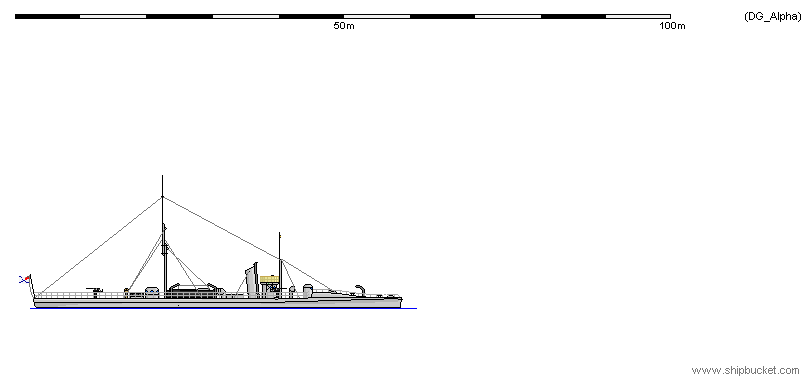
Wotan, polish patrol boat laid down 1886 (Engine 1909), captured 1917
Displacement:
195 t light; 201 t standard; 249 t normal; 287 t full load
Dimensions: Length overall / water x beam x draught
184,04 ft / 181,99 ft x 21,65 ft x 8,53 ft (normal load)
56,10 m / 55,47 m x 6,60 m x 2,60 m
Armament:
2 - 1,97" / 50,0 mm guns in single mounts, 3,81lbs / 1,73kg shells, 1892 Model
Quick firing guns in deck mounts
on side, all forward
1 - 1,97" / 50,0 mm guns in single mounts, 3,81lbs / 1,73kg shells, 1892 Model
Quick firing gun in deck mount
on centreline aft
Weight of broadside 11 lbs / 5 kg
Shells per gun, main battery: 165
Machinery:
Coal fired boilers, complex reciprocating steam engines,
Direct drive, 1 shaft, 2 023 ihp / 1 509 Kw = 20,30 kts
Range 1 520nm at 14,00 kts
Bunker at max displacement = 85 tons (100% coal)
Complement:
30 - 40
Cost:
£0,025 million / $0,101 million
Distribution of weights at normal displacement:
Armament: 1 tons, 0,6%
Machinery: 124 tons, 49,8%
Hull, fittings & equipment: 70 tons, 28,1%
Fuel, ammunition & stores: 54 tons, 21,6%
Miscellaneous weights: 0 tons, 0,0%
Overall survivability and seakeeping ability:
Survivability (Non-critical penetrating hits needed to sink ship):
97 lbs / 44 Kg = 27,1 x 2,0 " / 50 mm shells or 0,2 torpedoes
Stability (Unstable if below 1.00): 2,17
Metacentric height 1,7 ft / 0,5 m
Roll period: 7,0 seconds
Steadiness - As gun platform (Average = 50 %): 63 %
- Recoil effect (Restricted arc if above 1.00): 0,01
Seaboat quality (Average = 1.00): 1,25
Hull form characteristics:
Hull has raised forecastle
Block coefficient: 0,259
Length to Beam Ratio: 8,40 : 1
'Natural speed' for length: 13,49 kts
Power going to wave formation at top speed: 51 %
Trim (Max stability = 0, Max steadiness = 100): 50
Bow angle (Positive = bow angles forward): 6,00 degrees
Stern overhang: 1,48 ft / 0,45 m
Freeboard (% = measuring location as a percentage of overall length):
- Stem: 5,48 ft / 1,67 m
- Forecastle (24%): 7,97 ft / 2,43 m (4,99 ft / 1,52 m aft of break)
- Mid (50%): 4,99 ft / 1,52 m
- Quarterdeck (17%): 4,99 ft / 1,52 m
- Stern: 4,99 ft / 1,52 m
- Average freeboard: 5,47 ft / 1,67 m
Ship tends to be wet forward
Ship space, strength and comments:
Space - Hull below water (magazines/engines, low = better): 165,4%
- Above water (accommodation/working, high = better): 110,4%
Waterplane Area: 3 488 Square feet or 324 Square metres
Displacement factor (Displacement / loading): 77%
Structure weight / hull surface area: 17 lbs/sq ft or 84 Kg/sq metre
Hull strength (Relative):
- Cross-sectional: 0,47
- Longitudinal: 1,21
- Overall: 0,51
Caution: Hull subject to strain in open-sea
Hull space for machinery, storage, compartmentation is cramped
Room for accommodation and workspaces is adequate
Good seaboat, rides out heavy weather easily
Aldebaran, polish auxiliary patrol boat laid down 1893, captured 1917
Displacement:
269 t normal
Dimensions: Length overall / water x beam x draught
137,24 ft / 115,39 ft x 24,67 ft x 10,04 ft (normal load)
41,83 m / 35,17 m x 7,52 m x 3,06 m
Armament:
1 - 3,46" / 88,0 mm guns in single mounts, 20,79lbs / 9,43kg shells, 1900 Model
Quick firing gun in deck mount
on centreline amidships
1 - 0,30" / 7,6 mm guns in single mounts, 0,01lbs / 0,00kg shells, 1908 Model
Machine gun in deck mount
on centreline forward
2 - 0,30" / 7,6 mm guns in single mounts, 0,01lbs / 0,00kg shells, 1893 Model
Machine guns in deck mounts
on centreline ends, evenly spread
Weight of broadside 21 lbs / 9 kg
Shells per gun, main battery: 100
Propulsion:
Sails
Complement:
53
Cost:
£0,011 million / $0,045 million
Distribution of weights at normal displacement:
Armament: 3 tons, 1,0%
Machinery: 0 tons, 0,0%
Hull, fittings & equipment: 225 tons, 83,5%
Fuel, ammunition & stores: 8 tons, 2,9%
Miscellaneous weights: 34 tons, 12,6%
Overall survivability and seakeeping ability:
Survivability (Non-critical penetrating hits needed to sink ship):
771 lbs / 350 Kg = 37,1 x 3,5 " / 88 mm shells or 0,8 torpedoes
Stability (Unstable if below 1.00): 0,81
Metacentric height 0,4 ft / 0,1 m
Roll period: 16,8 seconds
Steadiness - As gun platform (Average = 50 %): 100 %
- Recoil effect (Restricted arc if above 1.00): 0,14
Seaboat quality (Average = 1.00): 2,00
Hull form characteristics:
Hull has a flush deck
Block coefficient: 0,330
Length to Beam Ratio: 4,68 : 1
'Natural speed' for length: 10,74 kts
Power going to wave formation at top speed: 0 %
Trim (Max stability = 0, Max steadiness = 100): 50
Bow angle (Positive = bow angles forward): 38,00 degrees
Stern overhang: 8,99 ft / 2,74 m
Freeboard (% = measuring location as a percentage of overall length):
- Stem: 16,47 ft / 5,02 m
- Forecastle (15%): 11,45 ft / 3,49 m
- Mid (50%): 11,45 ft / 3,49 m
- Quarterdeck (11%): 11,45 ft / 3,49 m
- Stern: 15,45 ft / 4,71 m
- Average freeboard: 11,97 ft / 3,65 m
Ship space, strength and comments:
Space - Hull below water (magazines/engines, low = better): 22,6%
- Above water (accommodation/working, high = better): 108,8%
Waterplane Area: 1 646 Square feet or 153 Square metres
Displacement factor (Displacement / loading): 491%
Structure weight / hull surface area: 59 lbs/sq ft or 287 Kg/sq metre
Hull strength (Relative):
- Cross-sectional: 1,37
- Longitudinal: 37,30
- Overall: 1,91
Hull space for machinery, storage, compartmentation is excellent
Room for accommodation and workspaces is adequate
Ship has slow, easy roll, a good, steady gun platform
Excellent seaboat, comfortable, can fire her guns in the heaviest weather
Aldebaran (1893, captured 1917)
Rigel (1893, captured 1917)
Memel, polish auxiliary patrol boat laid down 1907, captured 1917
Displacement:
354 t light; 362 t standard; 386 t normal; 404 t full load
Dimensions: Length overall / water x beam x draught
134,74 ft / 133,23 ft x 26,41 ft x 6,00 ft (normal load)
41,07 m / 40,61 m x 8,05 m x 1,83 m
Armament:
2 - 1,97" / 50,0 mm guns in single mounts, 3,81lbs / 1,73kg shells, 1892 Model
Quick firing guns in deck mounts
on centreline ends, evenly spread
2 - 0,30" / 7,6 mm guns in single mounts, 0,01lbs / 0,00kg shells, 1913 Model
Machine guns in deck mounts
on side, all amidships, all raised mounts - superfiring
Weight of broadside 8 lbs / 3 kg
Shells per gun, main battery: 200
Machinery:
Coal fired boilers, simple reciprocating steam engines,
Direct drive, 1 shaft, 474 ihp / 354 Kw = 12,00 kts
Range 2 000nm at 8,00 kts
Bunker at max displacement = 42 tons (100% coal)
Complement:
43 - 56
Cost:
£0,024 million / $0,097 million
Distribution of weights at normal displacement:
Armament: 1 tons, 0,2%
Machinery: 79 tons, 20,5%
Hull, fittings & equipment: 274 tons, 71,0%
Fuel, ammunition & stores: 32 tons, 8,3%
Miscellaneous weights: 0 tons, 0,0%
Overall survivability and seakeeping ability:
Survivability (Non-critical penetrating hits needed to sink ship):
696 lbs / 316 Kg = 182,6 x 2,0 " / 50 mm shells or 0,6 torpedoes
Stability (Unstable if below 1.00): 1,47
Metacentric height 1,3 ft / 0,4 m
Roll period: 9,6 seconds
Steadiness - As gun platform (Average = 50 %): 51 %
- Recoil effect (Restricted arc if above 1.00): 0,01
Seaboat quality (Average = 1.00): 1,02
Hull form characteristics:
Hull has a flush deck
Block coefficient: 0,639
Length to Beam Ratio: 5,04 : 1
'Natural speed' for length: 11,54 kts
Power going to wave formation at top speed: 53 %
Trim (Max stability = 0, Max steadiness = 100): 50
Bow angle (Positive = bow angles forward): 0,00 degrees
Stern overhang: 1,51 ft / 0,46 m
Freeboard (% = measuring location as a percentage of overall length):
- Stem: 6,99 ft / 2,13 m
- Forecastle (14%): 5,48 ft / 1,67 m
- Mid (50%): 5,48 ft / 1,67 m
- Quarterdeck (6%): 5,48 ft / 1,67 m
- Stern: 5,48 ft / 1,67 m
- Average freeboard: 5,56 ft / 1,70 m
Ship tends to be wet forward
Ship space, strength and comments:
Space - Hull below water (magazines/engines, low = better): 69,5%
- Above water (accommodation/working, high = better): 63,7%
Waterplane Area: 2 627 Square feet or 244 Square metres
Displacement factor (Displacement / loading): 233%
Structure weight / hull surface area: 79 lbs/sq ft or 388 Kg/sq metre
Hull strength (Relative):
- Cross-sectional: 2,68
- Longitudinal: 4,55
- Overall: 2,82
Hull space for machinery, storage, compartmentation is excellent
Room for accommodation and workspaces is cramped
Jantar, polish depot ship laid down 1908, captured 1917
Displacement:
1 229 t light; 1 258 t standard; 1 425 t normal; 1 559 t full load
Dimensions: Length overall / water x beam x draught
243,62 ft / 235,14 ft x 36,84 ft x 7,68 ft (normal load)
74,26 m / 71,67 m x 11,23 m x 2,34 m
Armament:
2 - 1,97" / 50,0 mm guns in single mounts, 3,81lbs / 1,73kg shells, 1892 Model
Quick firing guns in deck mounts
on side, all forward
1 - 1,46" / 37,0 mm guns in single mounts, 1,55lbs / 0,70kg shells, 1916 Model
Anti-aircraft gun in deck mount
on centreline amidships, 1 raised gun
Weight of broadside 9 lbs / 4 kg
Shells per gun, main battery: 200
Machinery:
Coal fired boilers, complex reciprocating steam engines,
Direct drive, 2 shafts, 1 650 ihp / 1 231 Kw = 14,00 kts
Range 4 000nm at 10,00 kts
Bunker at max displacement = 300 tons (100% coal)
Complement:
115 - 150
Cost:
£0,065 million / $0,260 million
Distribution of weights at normal displacement:
Armament: 1 tons, 0,1%
Machinery: 150 tons, 10,5%
Hull, fittings & equipment: 808 tons, 56,7%
Fuel, ammunition & stores: 197 tons, 13,8%
Miscellaneous weights: 270 tons, 18,9%
Overall survivability and seakeeping ability:
Survivability (Non-critical penetrating hits needed to sink ship):
3 155 lbs / 1 431 Kg = 827,1 x 2,0 " / 50 mm shells or 1,4 torpedoes
Stability (Unstable if below 1.00): 1,26
Metacentric height 1,7 ft / 0,5 m
Roll period: 11,9 seconds
Steadiness - As gun platform (Average = 50 %): 66 %
- Recoil effect (Restricted arc if above 1.00): 0,00
Seaboat quality (Average = 1.00): 1,32
Hull form characteristics:
Hull has a flush deck
Block coefficient: 0,750
Length to Beam Ratio: 6,38 : 1
'Natural speed' for length: 15,33 kts
Power going to wave formation at top speed: 45 %
Trim (Max stability = 0, Max steadiness = 100): 50
Bow angle (Positive = bow angles forward): 31,00 degrees
Stern overhang: 2,49 ft / 0,76 m
Freeboard (% = measuring location as a percentage of overall length):
- Stem: 9,97 ft / 3,04 m
- Forecastle (20%): 8,46 ft / 2,58 m
- Mid (50%): 8,46 ft / 2,58 m
- Quarterdeck (20%): 8,46 ft / 2,58 m
- Stern: 8,46 ft / 2,58 m
- Average freeboard: 8,58 ft / 2,62 m
Ship tends to be wet forward
Ship space, strength and comments:
Space - Hull below water (magazines/engines, low = better): 56,5%
- Above water (accommodation/working, high = better): 101,7%
Waterplane Area: 7 256 Square feet or 674 Square metres
Displacement factor (Displacement / loading): 246%
Structure weight / hull surface area: 87 lbs/sq ft or 423 Kg/sq metre
Hull strength (Relative):
- Cross-sectional: 2,10
- Longitudinal: 2,30
- Overall: 2,12
Hull space for machinery, storage, compartmentation is excellent
Room for accommodation and workspaces is adequate
Good seaboat, rides out heavy weather easily
W związku z wspomnianym przejściowym (najprawdopodobniej) opanowaniem Mierzei Kurońskiej, polskie dowództwo postanowiło zorganizować małą improwizowaną flotyllę na Zalewie Kurońskim. W jej skład weszło kilka jednostek zdobytych w Memlu – których Niemcy nie zdążyli zniszczyć, bądź uszkodzić w stopniu uniemożliwiającym ich wykorzystanie. Z powodów oczywistych, w skład flotylli weszły tylko jednostki o niedużym zanurzeniu. Wśród nich są: dawny duży torpedowiec (okręt dowódcy dywizjonu) typu D 1 z 1887 r. jeszcze pod banderą niemiecką pozbawiony uzbrojenia torpedowego i przekształcony na dozorowiec z uzbrojeniem 3x50 L/40, dwa żaglowe szkunery, które otrzymały po 1 niemieckim dziale kal. 88 mm uzupełnionym pojedynczym km-em oraz mały wycieczkowiec przybrzeżny przekształcony w pomocniczy dozorowiec (2x50 L/40, 2 km-y). Oprócz tych jednostek, w nasze ręce wpadł prom kolejowy, który naprędce przekształcono w okręt-bazę dla jednostek flotylli.
Wotan, polish patrol boat laid down 1886 (Engine 1909), captured 1917
Displacement:
195 t light; 201 t standard; 249 t normal; 287 t full load
Dimensions: Length overall / water x beam x draught
184,04 ft / 181,99 ft x 21,65 ft x 8,53 ft (normal load)
56,10 m / 55,47 m x 6,60 m x 2,60 m
Armament:
2 - 1,97" / 50,0 mm guns in single mounts, 3,81lbs / 1,73kg shells, 1892 Model
Quick firing guns in deck mounts
on side, all forward
1 - 1,97" / 50,0 mm guns in single mounts, 3,81lbs / 1,73kg shells, 1892 Model
Quick firing gun in deck mount
on centreline aft
Weight of broadside 11 lbs / 5 kg
Shells per gun, main battery: 165
Machinery:
Coal fired boilers, complex reciprocating steam engines,
Direct drive, 1 shaft, 2 023 ihp / 1 509 Kw = 20,30 kts
Range 1 520nm at 14,00 kts
Bunker at max displacement = 85 tons (100% coal)
Complement:
30 - 40
Cost:
£0,025 million / $0,101 million
Distribution of weights at normal displacement:
Armament: 1 tons, 0,6%
Machinery: 124 tons, 49,8%
Hull, fittings & equipment: 70 tons, 28,1%
Fuel, ammunition & stores: 54 tons, 21,6%
Miscellaneous weights: 0 tons, 0,0%
Overall survivability and seakeeping ability:
Survivability (Non-critical penetrating hits needed to sink ship):
97 lbs / 44 Kg = 27,1 x 2,0 " / 50 mm shells or 0,2 torpedoes
Stability (Unstable if below 1.00): 2,17
Metacentric height 1,7 ft / 0,5 m
Roll period: 7,0 seconds
Steadiness - As gun platform (Average = 50 %): 63 %
- Recoil effect (Restricted arc if above 1.00): 0,01
Seaboat quality (Average = 1.00): 1,25
Hull form characteristics:
Hull has raised forecastle
Block coefficient: 0,259
Length to Beam Ratio: 8,40 : 1
'Natural speed' for length: 13,49 kts
Power going to wave formation at top speed: 51 %
Trim (Max stability = 0, Max steadiness = 100): 50
Bow angle (Positive = bow angles forward): 6,00 degrees
Stern overhang: 1,48 ft / 0,45 m
Freeboard (% = measuring location as a percentage of overall length):
- Stem: 5,48 ft / 1,67 m
- Forecastle (24%): 7,97 ft / 2,43 m (4,99 ft / 1,52 m aft of break)
- Mid (50%): 4,99 ft / 1,52 m
- Quarterdeck (17%): 4,99 ft / 1,52 m
- Stern: 4,99 ft / 1,52 m
- Average freeboard: 5,47 ft / 1,67 m
Ship tends to be wet forward
Ship space, strength and comments:
Space - Hull below water (magazines/engines, low = better): 165,4%
- Above water (accommodation/working, high = better): 110,4%
Waterplane Area: 3 488 Square feet or 324 Square metres
Displacement factor (Displacement / loading): 77%
Structure weight / hull surface area: 17 lbs/sq ft or 84 Kg/sq metre
Hull strength (Relative):
- Cross-sectional: 0,47
- Longitudinal: 1,21
- Overall: 0,51
Caution: Hull subject to strain in open-sea
Hull space for machinery, storage, compartmentation is cramped
Room for accommodation and workspaces is adequate
Good seaboat, rides out heavy weather easily
Displacement:
269 t normal
Dimensions: Length overall / water x beam x draught
137,24 ft / 115,39 ft x 24,67 ft x 10,04 ft (normal load)
41,83 m / 35,17 m x 7,52 m x 3,06 m
Armament:
1 - 3,46" / 88,0 mm guns in single mounts, 20,79lbs / 9,43kg shells, 1900 Model
Quick firing gun in deck mount
on centreline amidships
1 - 0,30" / 7,6 mm guns in single mounts, 0,01lbs / 0,00kg shells, 1908 Model
Machine gun in deck mount
on centreline forward
2 - 0,30" / 7,6 mm guns in single mounts, 0,01lbs / 0,00kg shells, 1893 Model
Machine guns in deck mounts
on centreline ends, evenly spread
Weight of broadside 21 lbs / 9 kg
Shells per gun, main battery: 100
Propulsion:
Sails
Complement:
53
Cost:
£0,011 million / $0,045 million
Distribution of weights at normal displacement:
Armament: 3 tons, 1,0%
Machinery: 0 tons, 0,0%
Hull, fittings & equipment: 225 tons, 83,5%
Fuel, ammunition & stores: 8 tons, 2,9%
Miscellaneous weights: 34 tons, 12,6%
Overall survivability and seakeeping ability:
Survivability (Non-critical penetrating hits needed to sink ship):
771 lbs / 350 Kg = 37,1 x 3,5 " / 88 mm shells or 0,8 torpedoes
Stability (Unstable if below 1.00): 0,81
Metacentric height 0,4 ft / 0,1 m
Roll period: 16,8 seconds
Steadiness - As gun platform (Average = 50 %): 100 %
- Recoil effect (Restricted arc if above 1.00): 0,14
Seaboat quality (Average = 1.00): 2,00
Hull form characteristics:
Hull has a flush deck
Block coefficient: 0,330
Length to Beam Ratio: 4,68 : 1
'Natural speed' for length: 10,74 kts
Power going to wave formation at top speed: 0 %
Trim (Max stability = 0, Max steadiness = 100): 50
Bow angle (Positive = bow angles forward): 38,00 degrees
Stern overhang: 8,99 ft / 2,74 m
Freeboard (% = measuring location as a percentage of overall length):
- Stem: 16,47 ft / 5,02 m
- Forecastle (15%): 11,45 ft / 3,49 m
- Mid (50%): 11,45 ft / 3,49 m
- Quarterdeck (11%): 11,45 ft / 3,49 m
- Stern: 15,45 ft / 4,71 m
- Average freeboard: 11,97 ft / 3,65 m
Ship space, strength and comments:
Space - Hull below water (magazines/engines, low = better): 22,6%
- Above water (accommodation/working, high = better): 108,8%
Waterplane Area: 1 646 Square feet or 153 Square metres
Displacement factor (Displacement / loading): 491%
Structure weight / hull surface area: 59 lbs/sq ft or 287 Kg/sq metre
Hull strength (Relative):
- Cross-sectional: 1,37
- Longitudinal: 37,30
- Overall: 1,91
Hull space for machinery, storage, compartmentation is excellent
Room for accommodation and workspaces is adequate
Ship has slow, easy roll, a good, steady gun platform
Excellent seaboat, comfortable, can fire her guns in the heaviest weather
Aldebaran (1893, captured 1917)
Rigel (1893, captured 1917)
Memel, polish auxiliary patrol boat laid down 1907, captured 1917
Displacement:
354 t light; 362 t standard; 386 t normal; 404 t full load
Dimensions: Length overall / water x beam x draught
134,74 ft / 133,23 ft x 26,41 ft x 6,00 ft (normal load)
41,07 m / 40,61 m x 8,05 m x 1,83 m
Armament:
2 - 1,97" / 50,0 mm guns in single mounts, 3,81lbs / 1,73kg shells, 1892 Model
Quick firing guns in deck mounts
on centreline ends, evenly spread
2 - 0,30" / 7,6 mm guns in single mounts, 0,01lbs / 0,00kg shells, 1913 Model
Machine guns in deck mounts
on side, all amidships, all raised mounts - superfiring
Weight of broadside 8 lbs / 3 kg
Shells per gun, main battery: 200
Machinery:
Coal fired boilers, simple reciprocating steam engines,
Direct drive, 1 shaft, 474 ihp / 354 Kw = 12,00 kts
Range 2 000nm at 8,00 kts
Bunker at max displacement = 42 tons (100% coal)
Complement:
43 - 56
Cost:
£0,024 million / $0,097 million
Distribution of weights at normal displacement:
Armament: 1 tons, 0,2%
Machinery: 79 tons, 20,5%
Hull, fittings & equipment: 274 tons, 71,0%
Fuel, ammunition & stores: 32 tons, 8,3%
Miscellaneous weights: 0 tons, 0,0%
Overall survivability and seakeeping ability:
Survivability (Non-critical penetrating hits needed to sink ship):
696 lbs / 316 Kg = 182,6 x 2,0 " / 50 mm shells or 0,6 torpedoes
Stability (Unstable if below 1.00): 1,47
Metacentric height 1,3 ft / 0,4 m
Roll period: 9,6 seconds
Steadiness - As gun platform (Average = 50 %): 51 %
- Recoil effect (Restricted arc if above 1.00): 0,01
Seaboat quality (Average = 1.00): 1,02
Hull form characteristics:
Hull has a flush deck
Block coefficient: 0,639
Length to Beam Ratio: 5,04 : 1
'Natural speed' for length: 11,54 kts
Power going to wave formation at top speed: 53 %
Trim (Max stability = 0, Max steadiness = 100): 50
Bow angle (Positive = bow angles forward): 0,00 degrees
Stern overhang: 1,51 ft / 0,46 m
Freeboard (% = measuring location as a percentage of overall length):
- Stem: 6,99 ft / 2,13 m
- Forecastle (14%): 5,48 ft / 1,67 m
- Mid (50%): 5,48 ft / 1,67 m
- Quarterdeck (6%): 5,48 ft / 1,67 m
- Stern: 5,48 ft / 1,67 m
- Average freeboard: 5,56 ft / 1,70 m
Ship tends to be wet forward
Ship space, strength and comments:
Space - Hull below water (magazines/engines, low = better): 69,5%
- Above water (accommodation/working, high = better): 63,7%
Waterplane Area: 2 627 Square feet or 244 Square metres
Displacement factor (Displacement / loading): 233%
Structure weight / hull surface area: 79 lbs/sq ft or 388 Kg/sq metre
Hull strength (Relative):
- Cross-sectional: 2,68
- Longitudinal: 4,55
- Overall: 2,82
Hull space for machinery, storage, compartmentation is excellent
Room for accommodation and workspaces is cramped
Jantar, polish depot ship laid down 1908, captured 1917
Displacement:
1 229 t light; 1 258 t standard; 1 425 t normal; 1 559 t full load
Dimensions: Length overall / water x beam x draught
243,62 ft / 235,14 ft x 36,84 ft x 7,68 ft (normal load)
74,26 m / 71,67 m x 11,23 m x 2,34 m
Armament:
2 - 1,97" / 50,0 mm guns in single mounts, 3,81lbs / 1,73kg shells, 1892 Model
Quick firing guns in deck mounts
on side, all forward
1 - 1,46" / 37,0 mm guns in single mounts, 1,55lbs / 0,70kg shells, 1916 Model
Anti-aircraft gun in deck mount
on centreline amidships, 1 raised gun
Weight of broadside 9 lbs / 4 kg
Shells per gun, main battery: 200
Machinery:
Coal fired boilers, complex reciprocating steam engines,
Direct drive, 2 shafts, 1 650 ihp / 1 231 Kw = 14,00 kts
Range 4 000nm at 10,00 kts
Bunker at max displacement = 300 tons (100% coal)
Complement:
115 - 150
Cost:
£0,065 million / $0,260 million
Distribution of weights at normal displacement:
Armament: 1 tons, 0,1%
Machinery: 150 tons, 10,5%
Hull, fittings & equipment: 808 tons, 56,7%
Fuel, ammunition & stores: 197 tons, 13,8%
Miscellaneous weights: 270 tons, 18,9%
Overall survivability and seakeeping ability:
Survivability (Non-critical penetrating hits needed to sink ship):
3 155 lbs / 1 431 Kg = 827,1 x 2,0 " / 50 mm shells or 1,4 torpedoes
Stability (Unstable if below 1.00): 1,26
Metacentric height 1,7 ft / 0,5 m
Roll period: 11,9 seconds
Steadiness - As gun platform (Average = 50 %): 66 %
- Recoil effect (Restricted arc if above 1.00): 0,00
Seaboat quality (Average = 1.00): 1,32
Hull form characteristics:
Hull has a flush deck
Block coefficient: 0,750
Length to Beam Ratio: 6,38 : 1
'Natural speed' for length: 15,33 kts
Power going to wave formation at top speed: 45 %
Trim (Max stability = 0, Max steadiness = 100): 50
Bow angle (Positive = bow angles forward): 31,00 degrees
Stern overhang: 2,49 ft / 0,76 m
Freeboard (% = measuring location as a percentage of overall length):
- Stem: 9,97 ft / 3,04 m
- Forecastle (20%): 8,46 ft / 2,58 m
- Mid (50%): 8,46 ft / 2,58 m
- Quarterdeck (20%): 8,46 ft / 2,58 m
- Stern: 8,46 ft / 2,58 m
- Average freeboard: 8,58 ft / 2,62 m
Ship tends to be wet forward
Ship space, strength and comments:
Space - Hull below water (magazines/engines, low = better): 56,5%
- Above water (accommodation/working, high = better): 101,7%
Waterplane Area: 7 256 Square feet or 674 Square metres
Displacement factor (Displacement / loading): 246%
Structure weight / hull surface area: 87 lbs/sq ft or 423 Kg/sq metre
Hull strength (Relative):
- Cross-sectional: 2,10
- Longitudinal: 2,30
- Overall: 2,12
Hull space for machinery, storage, compartmentation is excellent
Room for accommodation and workspaces is adequate
Good seaboat, rides out heavy weather easily
środa, 29 maja 2019
Co dalej?
Po dłuższej
przerwie temat rozpoznawczo-sondażowy ;) Chodzą mi bowiem po głowie
jakieś tam luźne koncepcje na przyszłą tematykę bloga i dobrze
by było wiedzieć, co czytelnicy na to ;) Generalnie, jak wiecie,
moim konikiem są okręty XIX-wieczne i tą tematyką chciałbym się
zająć. Do wyboru są dwie zasadnicze opcje. Pierwsza to luźne,
niezwiązane ze sobą posty na temat jakichś niezbudowanych
jednostek różnych flot bądź moje autorskie pomysły takich
okrętów. Opcja druga – to jakiś większy scenariusz
alternatywny, w ramach którego powstaje flota na zasadzie podobnej
jak to było dotychczas. Tu pomysłów mam kilka. Zaznaczam, że są
to tylko luźne przymiarki, bez dogłębniejszego analizowania
prawdopodobieństwa ich zajścia. Po prostu, kilka pomysłów które
poddaję pod „burzę mózgów” :)
1. Niepodległa
Finlandia – np. w wyniku wojny krymskiej. Można rozwijać małą
flotę obrony wybrzeża podobną do np. szwedzkiej.
2. Flotylle na
Wielkich Jeziorach (amerykańska i brytyjska) – bardzo specyficzne
warunki tych akwenów (ich wielkości, rozmiary dostępnych połączeń
między nimi itd.) kuszą możliwością powstania unikalnych w skali
świata jednostek. Nawet nie trzeba wiele modyfikować historii, bo
tradycja flotylli na Wielkich Jeziorach istniała (choćby z czasów
wojny 1812-1814) a plany wojny W. Brytanii z USA istniały przez cały
XIX w., aż do lat 30-tych XX w.
3. Flota chińska –
założenie jest takie, że nie dochodzi to takiej degrengolady
Państwa Środka jak w rzeczywistości, tylko kraj ten się
odpowiednio wcześnie modernizuje i przy swoim potencjale potrafi się
obronić przed ingerencją mocarstw zachodnich. Uwzględniając
wielkość tego kraju, można by zaprojektować jedną z czołowych
flot na świecie. Scenariusz teoretycznie najbardziej rozbudowany i
ingerujący w losy świata.
4. Flota
Konfederacji – przy założeniu że wojna secesyjna kończy się
jakiegoś rodzaju remisem. Mało prawdopodobne, ale można by wtedy
rozwijać równolegle dwie floty – konfederacką i Stanów
północnych, które musiały by zareagować na istnienie floty
Południa budową własnych okrętów.
5. Unia państw
skandynawskich – Szwecji, Norwegii i Danii. Tu widzę szansę na
budowę sporej floty, ale raczej nie oceanicznej, tylko
zabezpieczającej własne wybrzeża. Coś w rodzaju floty włoskiej
po bitwie pod Lissą. Sporo okrętów, nawet całkiem silnych i
dużych, ale raczej chroniących własne bazy, bez pretensji do
dominacji na oceanach.
6. A może jeszcze c
oś innego? ;)
ps. a tak w ogóle to temat PMW też pewnie trzeba będzie jakoś zakończyć...
sobota, 2 marca 2019
Amerykański krążownik liniowy
Poniższy okręt część z Was już pewnie zna, bowiem jego rysunek prezentowałem już na fow.pl, a teraz dorobiłem do niego tylko raport springsharpa. Jest to projekt amerykańskiego krążownika liniowego z 1910 r., będący w zasadzie szybszą wersją pancernika Wyoming. Okręt ma uzbrojenie ograniczone do 8 dział kal. 305 mm, za to wydłużony do prawie 204 m kadłub mieści siłownię pozwalającą uzyskać prędkość 26 w. Teoretycznie dało by się wycisnąć jeszcze trochę ale dałem sobie spokój, gdyż projekt przewidywał tylko 25 w. Rysunek powstał na podstawie planu Macieja Chodnickiego, zamieszczonego w jego "Amerykańskich ciężkich okrętach artyleryjskich (...)", tom III.
Bunker Hill, United States battlecruiser laid down 1910 (Engine 1912)
Displacement:
22 597 t light; 23 692 t standard; 25 917 t normal; 27 696 t full load
Dimensions: Length overall / water x beam x draught
668,14 ft / 668,14 ft x 92,91 ft x 28,02 ft (normal load)
203,65 m / 203,65 m x 28,32 m x 8,54 m
Armament:
8 - 12,01" / 305 mm guns (4x2 guns), 865,70lbs / 392,67kg shells, 1910 Model
Breech loading guns in turrets (on barbettes)
on centreline ends, evenly spread, 2 raised mounts - superfiring
16 - 5,00" / 127 mm guns in single mounts, 62,50lbs / 28,35kg shells, 1910 Model
Quick firing guns in casemate mounts
on side, all amidships
6 - 5,00" / 127 mm guns in single mounts, 62,50lbs / 28,35kg shells, 1910 Model
Quick firing guns in casemate mounts
on side ends, evenly spread
1 - 5,00" / 127 mm guns in single mounts, 62,50lbs / 28,35kg shells, 1910 Model
Quick firing gun in casemate mount
on centreline aft
Weight of broadside 8 363 lbs / 3 793 kg
Shells per gun, main battery: 120
2 - 21,0" / 533 mm submerged torpedo tubes
Armour:
- Belts: Width (max) Length (avg) Height (avg)
Main: 11,0" / 279 mm 508,60 ft / 155,02 m 11,58 ft / 3,53 m
Ends: 5,00" / 127 mm 40,29 ft / 12,28 m 6,59 ft / 2,01 m
119,26 ft / 36,35 m Unarmoured ends
Upper: 9,02" / 229 mm 440,98 ft / 134,41 m 6,50 ft / 1,98 m
Main Belt covers 117% of normal length
- Gun armour: Face (max) Other gunhouse (avg) Barbette/hoist (max)
Main: 12,0" / 305 mm 7,99" / 203 mm 11,0" / 279 mm
2nd: 6,50" / 165 mm - -
- Armour deck: 1,50" / 38 mm, Conning tower: 11,50" / 292 mm
Machinery:
Coal and oil fired boilers, steam turbines,
Geared drive, 4 shafts, 67 101 shp / 50 057 Kw = 26,00 kts
Range 8 000nm at 12,00 kts
Bunker at max displacement = 4 004 tons (85% coal)
Complement:
1 020 - 1 327
Cost:
£2,075 million / $8,300 million
Distribution of weights at normal displacement:
Armament: 1 045 tons, 4,0%
Armour: 7 671 tons, 29,6%
- Belts: 3 848 tons, 14,8%
- Torpedo bulkhead: 0 tons, 0,0%
- Armament: 2 438 tons, 9,4%
- Armour Deck: 1 168 tons, 4,5%
- Conning Tower: 217 tons, 0,8%
Machinery: 2 900 tons, 11,2%
Hull, fittings & equipment: 10 982 tons, 42,4%
Fuel, ammunition & stores: 3 319 tons, 12,8%
Miscellaneous weights: 0 tons, 0,0%
Overall survivability and seakeeping ability:
Survivability (Non-critical penetrating hits needed to sink ship):
40 565 lbs / 18 400 Kg = 46,9 x 12,0 " / 305 mm shells or 4,0 torpedoes
Stability (Unstable if below 1.00): 1,09
Metacentric height 5,3 ft / 1,6 m
Roll period: 17,0 seconds
Steadiness - As gun platform (Average = 50 %): 77 %
- Recoil effect (Restricted arc if above 1.00): 0,60
Seaboat quality (Average = 1.00): 1,54
Hull form characteristics:
Hull has a flush deck
Block coefficient: 0,522
Length to Beam Ratio: 7,19 : 1
'Natural speed' for length: 25,85 kts
Power going to wave formation at top speed: 48 %
Trim (Max stability = 0, Max steadiness = 100): 50
Bow angle (Positive = bow angles forward): 0,00 degrees
Stern overhang: 0,00 ft / 0,00 m
Freeboard (% = measuring location as a percentage of overall length):
- Stem: 25,95 ft / 7,91 m
- Forecastle (14%): 25,00 ft / 7,62 m
- Mid (50%): 22,90 ft / 6,98 m
- Quarterdeck (11%): 20,44 ft / 6,23 m
- Stern: 19,46 ft / 5,93 m
- Average freeboard: 22,83 ft / 6,96 m
Ship tends to be wet forward
Ship space, strength and comments:
Space - Hull below water (magazines/engines, low = better): 68,6%
- Above water (accommodation/working, high = better): 179,3%
Waterplane Area: 42 188 Square feet or 3 919 Square metres
Displacement factor (Displacement / loading): 119%
Structure weight / hull surface area: 180 lbs/sq ft or 877 Kg/sq metre
Hull strength (Relative):
- Cross-sectional: 1,04
- Longitudinal: 1,72
- Overall: 1,09
Hull space for machinery, storage, compartmentation is excellent
Room for accommodation and workspaces is excellent
Ship has slow, easy roll, a good, steady gun platform
Excellent seaboat, comfortable, can fire her guns in the heaviest weather
Bunker Hill, United States battlecruiser laid down 1910 (Engine 1912)
Displacement:
22 597 t light; 23 692 t standard; 25 917 t normal; 27 696 t full load
Dimensions: Length overall / water x beam x draught
668,14 ft / 668,14 ft x 92,91 ft x 28,02 ft (normal load)
203,65 m / 203,65 m x 28,32 m x 8,54 m
Armament:
8 - 12,01" / 305 mm guns (4x2 guns), 865,70lbs / 392,67kg shells, 1910 Model
Breech loading guns in turrets (on barbettes)
on centreline ends, evenly spread, 2 raised mounts - superfiring
16 - 5,00" / 127 mm guns in single mounts, 62,50lbs / 28,35kg shells, 1910 Model
Quick firing guns in casemate mounts
on side, all amidships
6 - 5,00" / 127 mm guns in single mounts, 62,50lbs / 28,35kg shells, 1910 Model
Quick firing guns in casemate mounts
on side ends, evenly spread
1 - 5,00" / 127 mm guns in single mounts, 62,50lbs / 28,35kg shells, 1910 Model
Quick firing gun in casemate mount
on centreline aft
Weight of broadside 8 363 lbs / 3 793 kg
Shells per gun, main battery: 120
2 - 21,0" / 533 mm submerged torpedo tubes
Armour:
- Belts: Width (max) Length (avg) Height (avg)
Main: 11,0" / 279 mm 508,60 ft / 155,02 m 11,58 ft / 3,53 m
Ends: 5,00" / 127 mm 40,29 ft / 12,28 m 6,59 ft / 2,01 m
119,26 ft / 36,35 m Unarmoured ends
Upper: 9,02" / 229 mm 440,98 ft / 134,41 m 6,50 ft / 1,98 m
Main Belt covers 117% of normal length
- Gun armour: Face (max) Other gunhouse (avg) Barbette/hoist (max)
Main: 12,0" / 305 mm 7,99" / 203 mm 11,0" / 279 mm
2nd: 6,50" / 165 mm - -
- Armour deck: 1,50" / 38 mm, Conning tower: 11,50" / 292 mm
Machinery:
Coal and oil fired boilers, steam turbines,
Geared drive, 4 shafts, 67 101 shp / 50 057 Kw = 26,00 kts
Range 8 000nm at 12,00 kts
Bunker at max displacement = 4 004 tons (85% coal)
Complement:
1 020 - 1 327
Cost:
£2,075 million / $8,300 million
Distribution of weights at normal displacement:
Armament: 1 045 tons, 4,0%
Armour: 7 671 tons, 29,6%
- Belts: 3 848 tons, 14,8%
- Torpedo bulkhead: 0 tons, 0,0%
- Armament: 2 438 tons, 9,4%
- Armour Deck: 1 168 tons, 4,5%
- Conning Tower: 217 tons, 0,8%
Machinery: 2 900 tons, 11,2%
Hull, fittings & equipment: 10 982 tons, 42,4%
Fuel, ammunition & stores: 3 319 tons, 12,8%
Miscellaneous weights: 0 tons, 0,0%
Overall survivability and seakeeping ability:
Survivability (Non-critical penetrating hits needed to sink ship):
40 565 lbs / 18 400 Kg = 46,9 x 12,0 " / 305 mm shells or 4,0 torpedoes
Stability (Unstable if below 1.00): 1,09
Metacentric height 5,3 ft / 1,6 m
Roll period: 17,0 seconds
Steadiness - As gun platform (Average = 50 %): 77 %
- Recoil effect (Restricted arc if above 1.00): 0,60
Seaboat quality (Average = 1.00): 1,54
Hull form characteristics:
Hull has a flush deck
Block coefficient: 0,522
Length to Beam Ratio: 7,19 : 1
'Natural speed' for length: 25,85 kts
Power going to wave formation at top speed: 48 %
Trim (Max stability = 0, Max steadiness = 100): 50
Bow angle (Positive = bow angles forward): 0,00 degrees
Stern overhang: 0,00 ft / 0,00 m
Freeboard (% = measuring location as a percentage of overall length):
- Stem: 25,95 ft / 7,91 m
- Forecastle (14%): 25,00 ft / 7,62 m
- Mid (50%): 22,90 ft / 6,98 m
- Quarterdeck (11%): 20,44 ft / 6,23 m
- Stern: 19,46 ft / 5,93 m
- Average freeboard: 22,83 ft / 6,96 m
Ship tends to be wet forward
Ship space, strength and comments:
Space - Hull below water (magazines/engines, low = better): 68,6%
- Above water (accommodation/working, high = better): 179,3%
Waterplane Area: 42 188 Square feet or 3 919 Square metres
Displacement factor (Displacement / loading): 119%
Structure weight / hull surface area: 180 lbs/sq ft or 877 Kg/sq metre
Hull strength (Relative):
- Cross-sectional: 1,04
- Longitudinal: 1,72
- Overall: 1,09
Hull space for machinery, storage, compartmentation is excellent
Room for accommodation and workspaces is excellent
Ship has slow, easy roll, a good, steady gun platform
Excellent seaboat, comfortable, can fire her guns in the heaviest weather
Subskrybuj:
Posty (Atom)


